Live in Argentina — it’s very easy

I scraped lawyer websites, Facebook groups, WhatsApp groups, and Telegram groups. The insight: expats usually just need information not a lawyer.

Citizenship after 2 years — yes, really
Rentista visa, step by step
Getting your money in, safely
Free, forever No affiliate kickbacks Recommendation sources shown clearly Not legal or tax advice — real expat experiences

Guides — Everything an Expat Needs.

Start here

Residency & Visas

Which path fits you: rentista if you have passive income, student visa if you don't — and which ones actually get you a DNI.

Read the guide →

Citizenship

A real naturalization case, start to judgment — every phase, document, and mistake, from someone who did it without a lawyer.

Read the guide →

Student Visa

Step by step through RaDEX: which schools qualify, real fees, and the visa types that convert into residency and a DNI.

Read the guide →

Permanent Residency

The marriage and family route, done personally — documents, apostilles, fees, and what changed under the 2025 decree.

Read the guide →

Money

Getting funds into the country after the cepo: cards, transfers, crypto, QR payments, and opening a local account.

Read the guide →

Argentine Tax System

Monotributo — the simplified self-employed regime: who it's for, what it costs, and how to register in an afternoon.

Read the guide →

Taxes for Expats

Six months here and you're a tax resident. What the law says, what expats actually do, and who can see your accounts.

Read the guide →

Moving to Argentina

The big picture: why Argentina, banking, visas, and how leases actually work now that the rental law is gone.

Read the guide →

Country Guide

Argentina beyond the paperwork — the economy in 2026, safety, cities, culture, and what living here actually feels like.

Read the guide →

Milei's Reforms

The Ley Bases and everything since — where the labor, investment, and migration reforms stand as of August 2026.

Read the guide →

Apostilles & Records

The golden rule of document prep — apostilles, criminal records, sworn translations, and the consular power-of-attorney shortcut.

Read the guide →

Dealing with Migraciones

Turnos, reading your RaDEX status without panicking, what to do when your file stalls, and the appeal deadlines that actually matter.

Read the guide →

DNI & Passport Renewals

The two clocks you're always running, renewal season at RENAPER, and the new-passport step everyone misses at the border.

Read the guide →

Domestic Workers

Hiring a cleaner legally under the 2026 labor reform — ARCA registration in an afternoon, what it really costs, and the questions to ask.

Read the guide →
Us in front of Teatro Colón, Buenos Aires

I came to Argentina for a visit, and I stayed for a life.

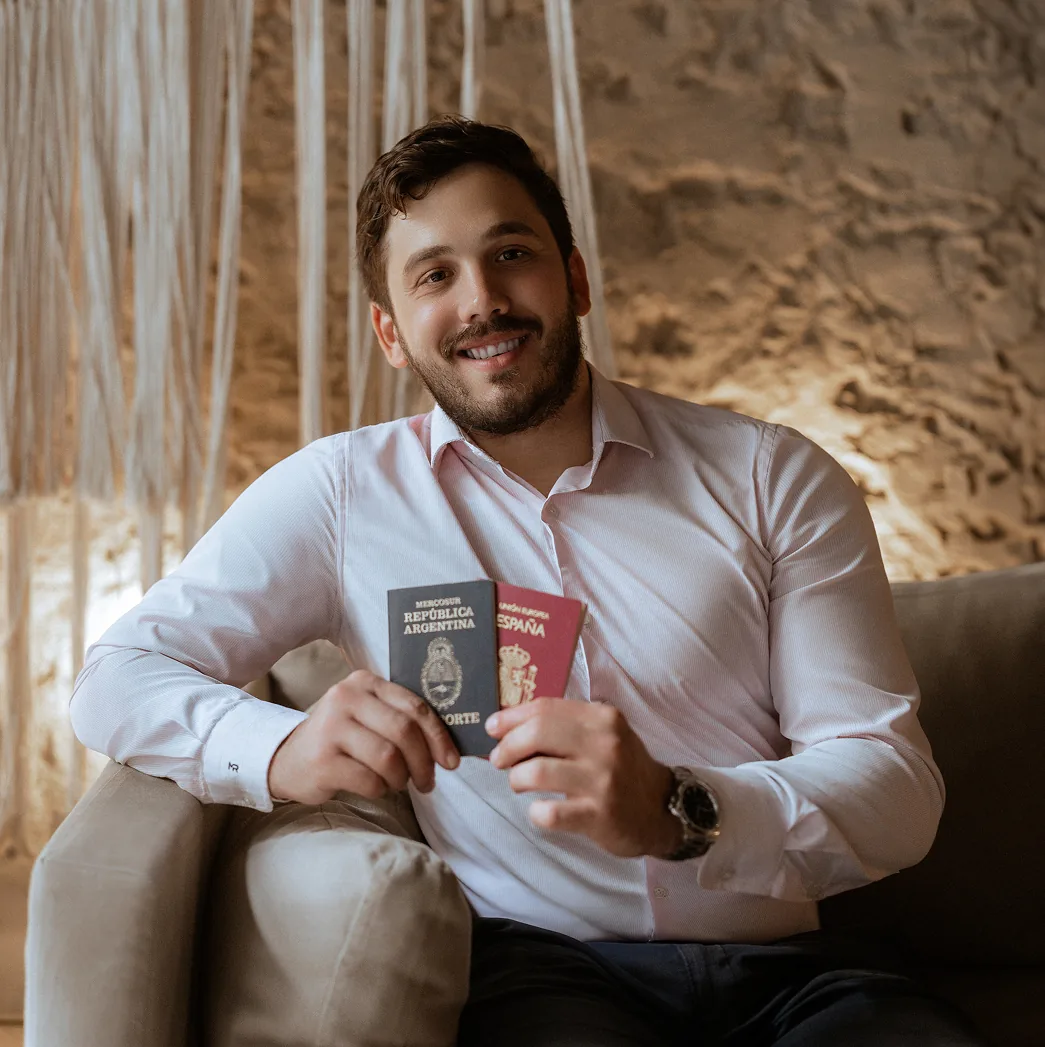
Hi, I'm Phil. I'm married to the beautiful girl in the photo, and we're raising our two sons here. I first visited Argentina in 2010 on a Harvard summer abroad and loved it. Years later I came back on vacation, met my wife, and now my wife and I and our family call this beautiful city of Buenos Aires home.

I've gone through the residency and renewal processes in many countries — sometimes with lawyers, sometimes on my own: Canada, Mexico, a few European countries, and now Argentina. My rule of thumb: if you speak the language, you can do it yourself — and even when you don't, you often can.

I saw from helping tons of people move abroad that this was long overdue.

— Welcome home.

Fed up with the Expat groups? So was I.

Five contradictory answers, three "DM me," and someone selling a $5,000 service for a $50 form. The truth: most processes here are simple and rarely change.

Watch out

Suspended and unlicensed "lawyers" troll the groups charging huge fees for paperwork you could do yourself. I name the good ones below.

One honest source

Dated, sourced, updated when the rules actually change.

No pay-to-play

Nobody buys a recommendation on this site.

DIY first

I tell you when you truly need a lawyer — and when you don't.

Real experience

Every process done personally, in Spanish, in Buenos Aires.

Trusted Lawyers Used by Friends

Trusted Realtors Used by Friends

How to read these recommendations: “Community recommended” reflects repeated recommendations from expats and community members. “Recommended by Batool” and “Recommended, used by a friend” identify personal referrals. Published credentials and service descriptions come from the linked professional or firm; current licensing is independently verified only when I explicitly say so.

Questions everyone asks.

Do I actually need a lawyer for any of this?

Mostly no. Filing in RaDEX, answering an observación, renewing a precaria, chasing a delay — you can do all of that yourself, and paying someone thousands of dollars to upload your PDFs is a bad trade. Hire a lawyer when there's a signed adverse act with a clock running: a denial, an expulsion order, an entry ban, anything touching a criminal record — and for citizenship, which is genuinely in legal flux. Before you pay anyone, ask for their full name and matrícula and verify it with the bar association; the ones cold-messaging you in Facebook groups are exactly the ones to avoid. Full guide · the ones I recommend.

Is Argentine citizenship really just two years?

Two years of legal, continuous residence is the standard, and you never have to renounce your original citizenship. Two catches. "Continuous" is now read strictly — long departures can reset the count, and time documented only by a precaria may not count at all. And the process itself is in real limbo: Decree 366/2025 moved naturalization from the federal courts to Migraciones, the Cámara Nacional Electoral annulled that in June 2026, and the government's Supreme Court appeal was still pending as of August 2026. Naturalization is back with the federal courts for now. This is the one area where a good lawyer earns their fee. Full guide.

Are permanent residency and citizenship the same path?

No — different statuses, different procedures, different offices. Permanent residency is a Migraciones category you upgrade into after two years of legal temporary residence for Mercosur nationals, three for everyone else; it gets you a DNI valid for 15 years. Citizenship is a separate application, currently judicial, and it gets you an Argentine passport and a vote. Doing one does not automatically produce the other. Full guide.

What's a precaria, and how long does it last?

It's the placeholder Migraciones issues once your file is live: valid up to 90 days (cut from 180 by Decree 366/2025), renewable online through RaDEX while your case is pending, and it lets you stay, work, study, and leave and re-enter. You can request the next one starting 15 days before the current one expires, then you have 10 business days to download it. Two honest caveats: stacking renewals earns you nothing and predicts nothing, and precaria time explicitly does not count toward arraigo for permanent residency or naturalization. Letting it lapse is the most avoidable self-inflicted wound in the whole process — put the date in your calendar. Full guide.

Can I leave Argentina while my residency is still pending?

Yes, on a valid precaria — that's precisely what it covers. What you should not do is travel on an expired precaria, or on an expired tourist stamp, and count on goodwill at the border. Renew before you fly, carry the printout with your passport, and don't book a trip that lands in the middle of a renewal window. Full guide.

My file has been stalled for months. What do I do?

Long silences are normal and are not, by themselves, a legal problem. Audit your own side first, because the delay is frequently there: did the fee payment actually post, did biometrics get captured, is there an unanswered requirement sitting in RaDEX from four months ago. If your side is clean, file a pronto despacho — a written request that the administration act on your file. It's an ordinary administrative step, not an act of aggression, and it creates a dated record that you asked. Keep your precaria current the entire time. Full guide.

I overstayed my tourist stamp. How bad is it?

The charge is trivial: a flat exit permit (habilitación de salida) of about ARS 40,000 (~US$27) for non-Mercosur nationals, valid 10 days — not a per-day fine. The trap is where you can pay it. Ezeiza and Aeroparque, yes; land borders, no — so don't plan to leave by bus or ferry to Uruguay with an expired stamp. And paying it no longer guarantees a warm welcome back: "false tourist" refusals went from 8% of border refusals in 2023 to 41% in 2025, and a refusal carries a five-year ban you can only appeal from abroad. Staying more than about six months? Get a real category. Full guide.

Can a Spanish school actually get me residency?

Yes — if the school is registered with Migraciones in the RENURE. Ask for proof before you pay tuition; non-Mercosur applicants get rejected specifically because the institution wasn't registered. The other thing to check is which status the program produces: short courses and transitoria permits only let you live here while you study, while the residency-grade student visa gets you a DNI and counts toward your time in the country. Pick the program by the status, not the timetable. Full guide.

How long until I actually have a DNI in my hand?

Depends on the path. Via marriage or family reunification: roughly a month from finishing the RaDEX upload to the appointment and precaria, another 2–4 months for the temporary residency resolution, then 1–3 months for the card to arrive by mail. Rentista has been running 6–8 months for DNI issuance after residency approval. Track it at mitramite.renaper.gob.ar with your 11-digit trámite ID — showing up in person does not make the post office faster. Full guide.

Can I open a bank account without a DNI?

Yes, but it's the bureaucratic version. You need a CDI from ARCA — the tax ID for people without residency — and with passport plus CDI, Banco Nación is the bank most commonly cited as opening accounts for non-residents. Others will want proof of local address and source of funds, and what you get (cards, tokens, app access, a dollar account) varies branch by branch. Honestly: if you're here for a few months, don't bother. A foreigner payment app like WanderWallet, CacaoCash or Wapu pays any QR or alias, and your foreign card now settles within about 1% of the best rate. Full guide.

Can I invoice clients legally on a temporary-residency DNI?

Yes. A DNI gets you a CUIT at ARCA, and from there monotributo — one fixed monthly payment bundling income tax, VAT, pension contributions and a basic health plan. Local clients get an ordinary factura; foreign clients get a Factura E, which is zero-rated for VAT and doesn't count toward your monotributo cap the way domestic billing does. The whole setup takes an afternoon, though a contador for the first meeting is money well spent. Full guide.

Can someone handle my paperwork while I'm out of the country?

Yes — you need a poder (power of attorney), and there's a shortcut most people miss. Argentine consulates perform notarial functions, so if you sign the poder in front of the consul, the resulting testimonio is directly usable here: no apostille, no legalization, no sworn translation. Many consulates hand you the paper the same day. The one piece to arrange from Argentina is the minuta, the draft text, written by an Argentine notary or lawyer — make it special rather than general, and name real estate, bank or company powers explicitly, or institutions won't honor them. Full guide.

Stay in touch.

Join the WhatsApp group for community conversation, or get an email only when the rules change.

Join the WhatsApp group

A calm place for the community to share experiences. Service providers aren’t allowed. Please include one or two sentences about who you are and why you want to join.

Join the WhatsApp group

Get notified when the rules change

No weekly spam. One email when something genuinely matters.